What we leave out defines us as much as what we keep. Exploring the beauty of negative space in design and life.
What we leave out defines us as much as what we keep. Exploring the beauty of negative space in design and life. The Japanese concept of ma — the space between, the pause, the gap — offers a corrective to our tendency toward accumulation.
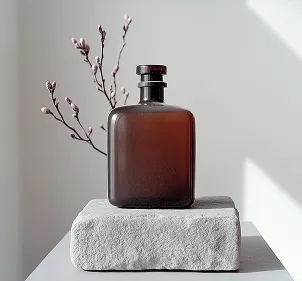
In visual art, negative space is the area around and between the subjects of an image. It is not background, not absence, but active presence. The vase in a still life is defined as much by the air it displaces as by its ceramic walls. The figure in a portrait exists in dialogue with the space that surrounds it.
Ma in the Built Environment
Traditional Japanese architecture understands this intimately. The engawa, the veranda that mediates between interior and garden, is defined by its openness. The shoji screen is as much about the light it admits as the privacy it provides. The tokonoma alcove is valued for its restraint — a single scroll, a single flower, surrounded by calculated emptiness.
Compare this to the Western tendency to fill, to decorate, to accumulate. We fear empty walls, silent pauses, unscheduled hours. We treat space as something to be conquered, colonized, optimized. But the result is often visual noise, temporal clutter, the anxiety of overcommitment.
There is a different possibility. To design with ma is to trust that what is not there matters as much as what is. To live with ma is to create room for breath, for attention, for the unexpected.