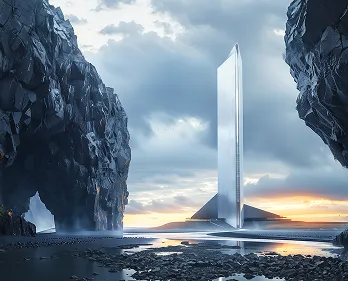
Photographing the spaces between. How landscape artists capture something that isn't quite there.
Photographing the spaces between. How landscape artists capture something that isn't quite there. The great landscape photographers have always understood that their subject is not the land but the light. The land is merely the surface on which light performs its variations, the stage for an atmospheric drama that changes minute by minute.
This is most evident in the photography of the American West, where the absence of humidity creates clarity and the scale of terrain creates possibility. The photographs of Ansel Adams, of Minor White, of the contemporary practitioners working in this tradition — they are studies in luminosity, in the material quality of illumination.
The Technical and the Transcendent
Landscape photography requires technical mastery. The dynamic range of natural scenes exceeds what sensors or film can capture; the photographer must choose what to preserve and what to sacrifice, or employ techniques of exposure blending, graduated filters, post-processing adjustment.
But technique serves something beyond itself. The goal is not accurate reproduction but felt experience — the transmission of what it was like to stand in that place, at that moment, with that quality of attention. The photograph is an invitation to a state of consciousness, not merely a record of a location.
This is why the best landscape photographs often contain what might be considered imperfections. The flare of light directly into the lens. The motion blur of wind in grass. The silhouette that reduces detail to shape. These are the signatures of presence, evidence that a human was there to receive the light.